
Why Slip Resistance and Durability Are Dominating Modern Building Design Trends
The latest building materials are fantastic… for a lot of things. But many of them, especially those intended for use in busy buildings like factories and warehouses, simply can’t withstand the often-brutal environment. And surfaces that become unstable just months after installation mean your operation is potentially shut down for a fundamentally avoidable issue. Replacing them quickly after an accident is an even-costlier option.
The Liability Problem Is Changing How Floors Get Specified
Trips and slips are the most frequent cause of workplace injury. Though the figures have barely shifted over the years, the impact of a slip, trip, or fall on an enterprise’s balance sheet and brand continues to grow. Compensation amounts are going up, lawyers are getting more litigious – and insurance premiums are sticking a few more percentage points on the bottom of some quotes. It’s a challenge to manage.
Poor flooring choices not only cost the construction industry more and expose designers to costly legal action, they bring extra cleaning and maintenance costs that eat into tight margins every day. Reduced operational life spans for replacement floors, as well as the hidden costs of lost productivity through time off for employees and contractors working with painful limbs, are expenses businesses can do without.
What’s Actually Happening On Warehouse Floors Right Now
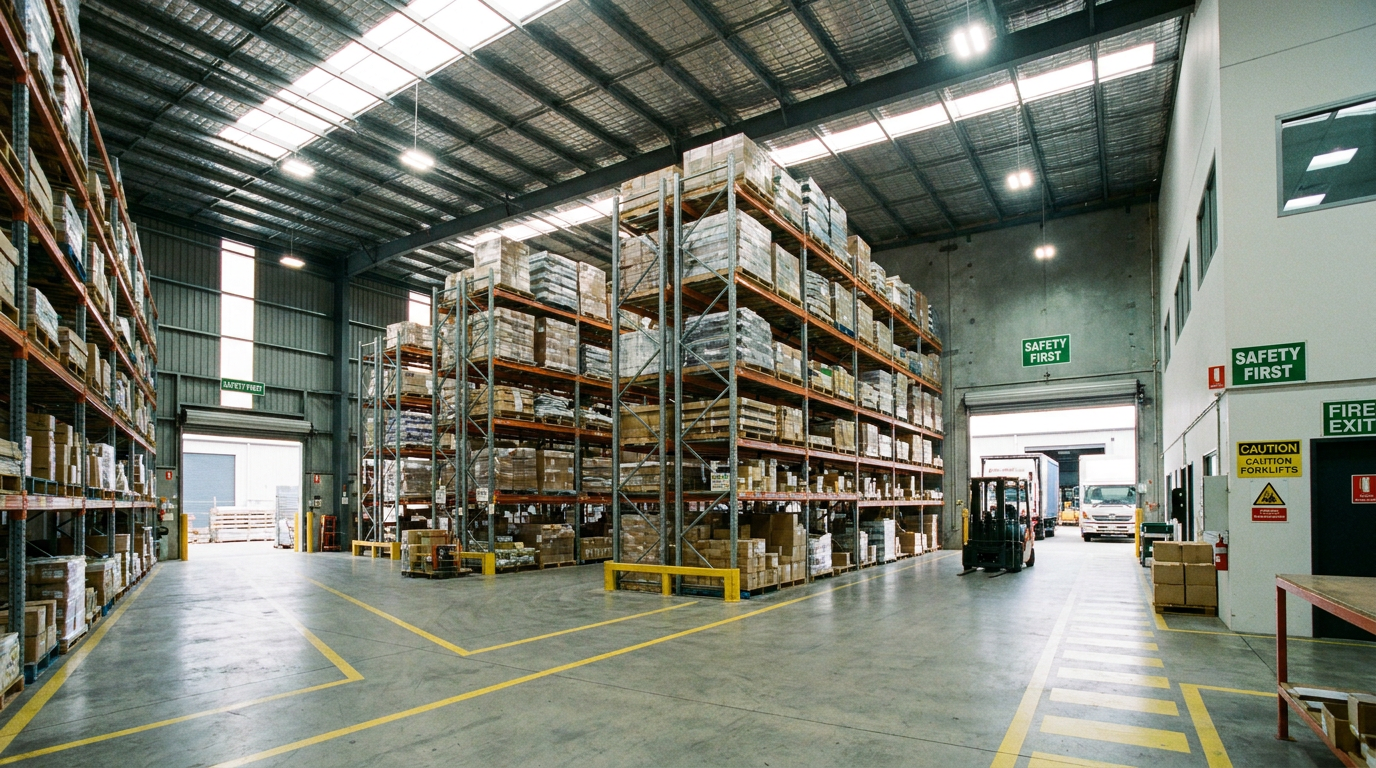
The warehouse sector has seen a vast transformation over the years and the floor inside these spaces has been at the receiving end of it. What used to be manual labor driven operations, now see the overarching presence of robotic systems. In the push for greater efficiency, the human-as-a-bottleneck approach has been replaced with AVs and forklifts. While this new design has brought in a lot of perceived benefits, the pressure of expectations has fallen on the warehouse floors. They are expected to uphold that stress and function like a champ. However, the reality is painted with multiple shades of wear & tear.
The continuous operation of AGVs running fixed routes at high frequencies ensures the quick depreciation of the concrete substrate. Not to overlook that the repetitive movement transfers the impact of the load repeatedly within the same square feet of the floor over a very short duration. This somehow doesn’t gel well with the term sustainable floor, right? Well, we are just getting started.
Adding to the agony of the concrete flooring system within the warehouse is the torture strip left by forklift tires and the lost warehouse revolution brought by heavy pallet loads. The combination of the two ensures that the minor repair works which are held before the next operational day turns into serious reconstruction within a few years of the concrete installation. The wear & tear is one major player of this unfortunate demolition of concrete flooring. The other is accidently on purpose – literally. The sort that can be seen when an operational asset forcibly projects its design flaw to ensure maximum damage to the existing facility – pallet obstruction and pit spallings are two telltale signs of the same.
The Physics Of Why Raised-Pattern Metal Works
Slip resistance can depend on two different indicators. Firstly, micro-roughness, which involves the very small texture that generates friction at the contact surface between a flooring material and a shoe or tyre. Secondly, macro-roughness, the larger scale pattern that gives liquids somewhere to go when they’re suddenly dislodged underfoot. Both are vital for holding your ground, and both degrade in different ways.
Metal tread plates are designed to deliver macro-roughness – particularly important in areas that get slick rather than wet. The 5-bar tread pattern and industrial diamonds that are the two most common raised-pattern designs aren’t simply decorative – they’re channels that push water, oil, and other lubricants away from the contact surface rather than allowing a self-building film to cause aquaplaning.
Cold stores and loading bays barely waste their time being dry so maintaining macro-roughness could probably save you having to make too many excuses. Fortunately, since the pattern is pressed into the metal at the same time as it’s manufactured, it can’t wear away the way a roughed or coated finish can. A tread plate that was gripping well five years after it was installed is just as effective as it was the day it went in – barring wear caused by the material itself corroding underfoot or distressing under load.
Material Selection For Real-World Exposure Conditions
Not every metal plate is created equal in any and all environments. Standard mild steel is absolutely fine for dry, indoor, controlled environments but it oxidises relatively quickly and that means a shorter life and a reduced safety factor around any exposed edge where degradation can occur when it comes into contact with moisture, salt, or industrial chemicals.
If you’re fitting out a coastal facility, or a food processing zone, chemical plant, or anywhere that regular floor-washing with extremely aggressive chemical cleaning agents is the norm, the starting material specification must account for exposure.
Aluminium 5754 is generally the grade specified for such environments where the additional life and safety of this more expensive but appropriate material balances with the cost of more regular steel replacement. In particular where wet (slippery) use can’t be avoided, this grade is perhaps the most cost-effective choice.
Identical to steel in finish and edge specification (and therefore interchangeably functional), hot-dip galvanised steel provides a protected layer where the base steel is coated in a layer of zinc which, over time, sacrifices itself in a very controlled manner to prevent the spreading of any oxidisation.
This type of steel is commonly specified for external ramps, loading docks, and industrial transitions that not only see mechanical impact but all weather as well.
Retrofitting Without Halting Operations
One of the most pragmatic cases for overlaying concrete with metal plate is the fact the work can be done without a complete shutdown. But for a logistics operation with worn or damaged floor areas, that’s likely the only viable option anyway. A resin recoat needs the damaged zone preparing, then everything staying away until the mixed resin sets. A full concrete repair means zone exclusion for several days – unless you overlay the old failing surface with something new.
Precision-cut metal sheets used as an overlay are a very different kind of solution. Add in sourcing from a specialist supplier like Chequer Plate Direct, who deliver each plate pre-cut to your exact site dimensions, and installation is both quicker and less wasteful. A loading bay threshold, a ramp approach that’s gone slick with wear, or a stair tread that’s been struck out by a forklift time and again, can all be repaired in a single shift while the site is still running.
That’s not to say the underside doesn’t matter; it does. The concrete across which the plate is being fixed should be level and in good order. Any hollow areas should be filled, and it’s easier to do that lifting the edge of a plate before it gets bolted down than in a patch of concrete that’s still damp around the edges. The more likely the substrate is to shift, sweat or flex as it cures, the more time the fixing will be working loose and the more likely it is that the top surface of the overlay is being notched. But a couple of guys with a mortar-mix can be working on that while another team is fabricating fastenings and lifting gear and the first team, therefore, slinging out completed sections.
Preventative Design Is Replacing Reactive Maintenance
The smartest current commercial architects and facility managers are those who do not wait for floor zones to fail. They locate high-risk areas – loading bays, internal ramps, transition zones between storage areas, stair nosings, areas adjacent to wash-down points – then, at design or refurbishment stage, they simply specify heavy-duty metal protection for those locations before they see damage.
This preventative design method is a strange and counterintuitive thing: it looks more expensive than the cheap ‘n’ cheerful model of using the same flooring material everywhere then paying for a series of patches and replacements as it degrades. But that apparent economy is an illusion. The metal option likely is cheaper, it just locks the cost away in tomorrow’s budget without showing the client exactly what is happening.
The best single-upfront-specification option takes no prisoners. It won’t just be fractionally less costly over its life, total lifecycle costs will make the arithmetic visible: the increased one-time capital spend will be dwarfed by the savings in maintenance and patch replacements. Multiple interventions accrue their own costs, but each has the same operational overhead. A single upfront spec of right, durable material in a predictable high-wear zone removes that cost cycle entirely.
Life-cycle costing opens up that game. You can see what a life-costed high-durability metal overlay looks like against the expected maintenance and replacement costs of ten or fifteen year standard alternatives. Metal is virtually always cheaper. A metal plate will be carefully recovered at end of life while the strip-out waste from a worn resin floor goes to landfill.
Accessibility and External Transitions
Adhering to accessibility standards in commercial buildings raises an additional aspect of the slip resistance issue. Transition zones and ramps that join the outside and the inside must be slip-resistant with no regard to the influence of surface treatment wearing or hydroplaning.
For these locations, textured metal plates provide a sure solution as the performance depends not on the condition of a surface that can wash away or lose its effect when wet but on a structure. An added advantage is that tread plate looks good and typically does not intrude far into the traffic surface, so it is relatively safe from scuffing off, though paint systems can wear off until safe resistance returns.
The safety manager or architect responsible for the project has the final say on the appropriate slip resistance for a given location, and once a textured metal plate is specified they have already addressed the issue for the life of the installation.
The Direction Of Travel Is Clear
Rising mechanical loads, wear patterns driven by automation, liability, and life-cycle costs are all converging to push specification decisions in a very clear direction. The best flooring material will not alleviate the need for the regular maintenance recommended by manufacturers, but it can improve overall operational life by decades. Smart, safety-focused choices don’t just save replacements, removals, and re-installations; they keep the facility revenue-positive.